Category: Catechumen

  • The Nous The Eye of the Soul in Eastern Orthodox Christianity

    The Nous The Eye of the Soul in Eastern Orthodox Christianity

    What if the key to truly knowing God isn’t just in your head, but in a deeper spiritual faculty you might never have heard of? In the rich tradition of Eastern Orthodoxy, that faculty is called the nous — and understanding it can transform how we approach prayer, faith, and life itself.
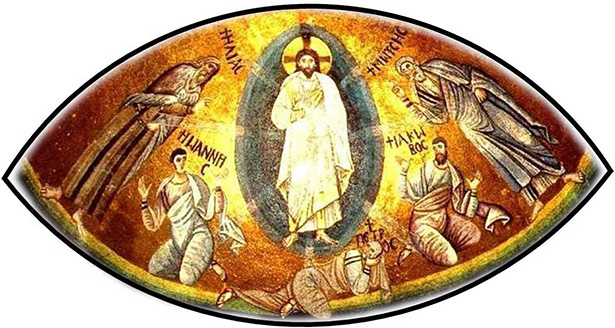
    An Interpretation of the Icon of the Transfiguration of the Lord

    Icon of the Transfiguration of Christ — a powerful symbol of the uncreated divine light that the purified nous can behold.

    What Exactly Is the Nous?

    In Orthodox Christianity, the nous is the “eye of the soul” or the “eye of the heart.” It’s the spiritual organ or faculty God gave us to perceive Him directly — not through reasoning, emotions, or the five senses, but through intuitive, noetic (spiritual) knowing.

    The ancient Greeks used nous to mean mind or intellect. The Church Fathers took this word and infused it with deeper meaning. It’s the highest part of the soul, the center where true spiritual knowledge is validated. Many saints call it the “heart” in a spiritual sense — the core of our being where we can meet God intimately.

    Important distinction: Don’t confuse the nous with your rational intellect (dianoia). Your brain excels at logic, analysis, and problem-solving. The nous receives and perceives spiritual realities directly. Think of it like a radio tuned to the divine frequency. When healthy, it lets us know God, not just know about Him.

    Created in God’s Image

    Orthodoxy teaches that the soul is created in the image of the Triune God. Just as God is Father (Nous), Son (Word), and Holy Spirit, humans have nous, word, and spirit as energies of the soul. This makes us a microcosm — a small universe reflecting all creation and capable of communion with the Creator.

    St. Thalassios put it beautifully: God created beings “with a capacity to receive the Spirit and to attain knowledge of Himself,” with our senses serving this higher noetic purpose.

    The Fall: When the Eye Darkened

    In the beginning, the nous was clear and oriented fully toward God. But the Fall changed everything. It involved a kind of rebellion — reason and passions rising up against the nous. The result? A darkened nous, scattered by distracting thoughts, fantasies, and passions.

    From the patristic perspective, this spiritual sickness affects us all to some degree. The nous gets clouded, making direct experience of God harder. We rely on logic alone and miss the deeper reality.

    Healing the Nous: The Heart of Orthodox Spirituality

    The good news? The Church’s entire spiritual tradition is therapeutic — designed to heal and illumine the nous. This leads through three classic stages: purification (catharsis), illumination (theoria), and deification (theosis).

    Thin Komboskini Prayer Rope

    Traditional Orthodox prayer ropes (komboskini) used for the Jesus Prayer — a primary tool for gathering and healing the nous.

    Key practices for healing:

    • The Jesus Prayer: “Lord Jesus Christ, Son of God, have mercy on me, a sinner.” This is the powerhouse tool. Start by saying it with your lips, move to mental repetition, then descend into the heart. Over time, it gathers the scattered nous and leads to unceasing prayer.
    • Hesychasm (Inner Stillness): Quiet, attentive prayer (often with a specific posture and breathing rhythm) that brings the nous down into the heart for union with God.
    ORTHODOX CHRISTIANITY THEN AND NOW: Saint John the Hesychast: A Bishop Who  Was Led By a Bright Star to the Lavra of Saint Savvas

    ORTHODOX CHRISTIANITY THEN AND NOW: Saint John the Hesychast: A Bishop Who Was Led By a Bright Star to the Lavra of Saint Savvas

    Icon of a hesychast saint in prayer — embodying the stillness and descent of the nous into the heart.

    • Ascetic Life: Fasting, repentance, vigilance (nepsis — watching your thoughts), sacraments, and virtues all purify the nous from passions.
    • The Philokalia: This collection of writings from the Fathers is a manual for this journey.

    Stages of the Jesus Prayer (as described by the saints):

    1. Vocal (with the lips).
    2. Noetic (in the mind/attention).
    3. In the heart (united nous and heart).
    4. Self-acting (prayer flows continuously).
    5. With divine warmth, light, and love (full illumination and experience of God’s presence).

    St. Gregory Palamas taught that a purified nous can behold the uncreated light of God — the same light seen at Christ’s Transfiguration.

    St. Gregory Palamas - 19 cm x 25 cm (7.5 in. x 10 in)

    Icon of St. Gregory Palamas, defender of hesychasm and teacher of the nous.

    Why the Nous Matters Today

    In our noisy, hyper-rational, screen-filled world, the nous offers a radical alternative: Spirituality isn’t abstract belief or fleeting emotion — it’s a transformed way of perceiving reality. It integrates the whole person and counters both dry intellectualism and vague “spirituality.”

    Icons, the Divine Liturgy, and hesychastic prayer all engage the nous. They draw us into the living presence of Christ.

    (Of course, balance is key. The Fathers didn’t reject reason — they saw it as a servant. And practices like hesychasm benefit from guidance from a spiritual father to avoid delusion.)

    Getting Started: Practical Steps

    • Begin with the Jesus Prayer daily — even just a few minutes with a prayer rope (komboskini).
    • Read introductory sections of the Philokalia or works by modern teachers like Metropolitan Hierotheos Vlachos or Fr. John Romanides.
    • Attend the Divine Liturgy and spend time in stillness before an icon.
    • Seek community and guidance in an Orthodox parish.

    The journey of the nous is ultimately about returning home — to the heart where Christ dwells.

  • Choosing a Patron Saint

    Choosing a Patron Saint

    Choosing a saint’s name — whether for baptism or as a patron — is one of the most beautiful parts of entering the Orthodox Church. It isn’t a strict formula or a test you can get wrong. It’s more like being welcomed into a family and discovering which of the saints feels like home. Your patron becomes someone you look up to, someone who prays for you, and the name you’ll hear when you come forward for the sacraments.

    Choosing a Patron Saint
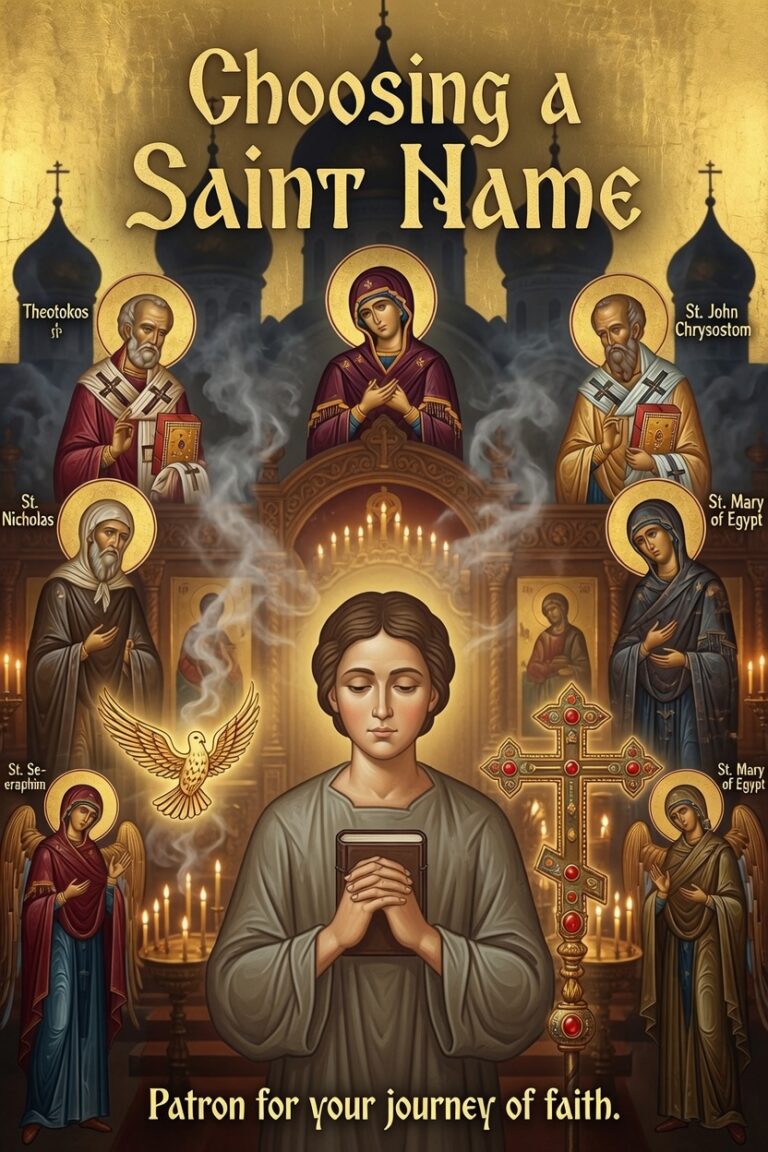
    Choosing a Saint for your Orthodox journey

    Since I was given my name at birth, I had to learn how this works for converts. Here’s the gentle, traditional guidance I’ve seen, though I always encourage people to talk with their priest because every parish and jurisdiction has its own pastoral wisdom.

    Ways People Commonly Choose a Patron Saint

    1. Looking at saints near meaningful dates

    This is one of the oldest approaches. Many people look at the saints commemorated around their birthday, their baptism/chrismation date, or another important moment in their life. Some use a three‑day window around the date. It’s a way of tying your new life in Christ to the rhythm of the Church.

    Helpful places to look: the OCA calendar, the Greek Archdiocese saint search, or even a printed Orthodox calendar.

    2. A saint you naturally feel drawn to

    This is especially common for adult converts. Sometimes a saint’s story, struggles, or personality just resonates. Maybe you read their life and something stirs. Maybe you keep noticing their icon. Sometimes it’s subtle, sometimes it’s immediate — but that quiet pull can be meaningful.

    Recently a close friend who is becoming Orthodox asked me how someone chooses a patron saint or a saint’s name. It’s one of those questions that seems simple until you try to answer it. I’m still learning myself, but I shared what I’ve picked up along the way, and I thought it might help others too.

    3. A connection to your given name

    If her legal name is already the name of an Orthodox saint (or close to one), she can often keep it by choosing a specific saint with that name. If not, some people choose a saint with a similar-sounding name.

    4. A saint connected to her life or vocation

    Some people choose a saint who reflects something about their journey:

    • Martyrs for courage in trials
    • Ascetics or theologians for spiritual depth
    • Saints tied to their profession, heritage, or personal struggles

    Others choose a “pairing” — a saint near their birthday and one they admire deeply.

    Practical Steps That Can Help

    • Begin with prayer. Ask God to guide the choice. Some people even pray, “If it’s Your will, let this saint draw me closer,” and pay attention to what follows.
    • Read the lives of the saints. Start broad, then narrow down to a few who stand out. Books like The Prologue of Ohrid or online synaxaria are great places to begin.
    • Talk with her priest. This is important. He may offer guidance, confirm the name, or even suggest one she hadn’t considered.
    • Choose a saint of the same gender. This is the usual practice for baptismal names, with only rare exceptions.

    A Little Encouragement

    • Her saint’s name becomes her Christian name in the Church, but she doesn’t need to change anything legally.
    • She’ll celebrate her Name Day, the feast of her saint, almost like a spiritual birthday.
    • And it’s okay if she doesn’t feel an instant, dramatic connection. Relationships with saints grow the same way relationships with people do — slowly, through prayer, reading, and simply living with them.

    If you want, you could even explore saints together. Share a favorite of yours, look through calendars, or read a few lives side by side. It’s a beautiful way to walk with her as she steps into the Church.

    May God bless her journey, and yours as you accompany her.