
Every year, Christmas arrives about three weeks before anyone is ready for it. There are gifts to buy, relatives to see, and a calendar that appears to have been filled in by someone who has never needed sleep.
The Church, in her wisdom, saw this coming about fifteen hundred years ago, and gave us forty days.
The Nativity Fast begins on November 15 and runs through December 24. It is forty days of simpler eating, more prayer, honest repentance, and paying attention to the people around us, so that when Christmas comes, we have some room left in us to receive it.
If you are reading this on November 20 and feeling behind: you are not. There is time to begin. There is also, I can tell you from long experience, time to begin again.
Which Dates?
Simply Orthodox follows the New Calendar for fixed feasts. That means the fast runs November 15 to December 24 on the ordinary calendar on your wall, and Christmas is December 25.
Parishes on the Old Calendar keep exactly the same fast, on the same Church dates, but at present those fall thirteen days later on the civil calendar: November 28 to January 6, with Christmas on January 7. Same forty days. Same feast. Different wall calendar.
If you are not sure which calendar your parish keeps, don’t guess by the name on the sign. Ask, or look at the parish calendar. It is the one with all the fish symbols on it.
Why Is It Called St Philip’s Fast?
You may hear old-timers call it St Philip’s Fast. The Apostle Philip is remembered on November 14, and the fast begins the very next day. So St Philip holds the door, and we walk through it on the 15th. (On the Old Calendar, that is November 27 and 28.)
What Are We Getting Ready For?
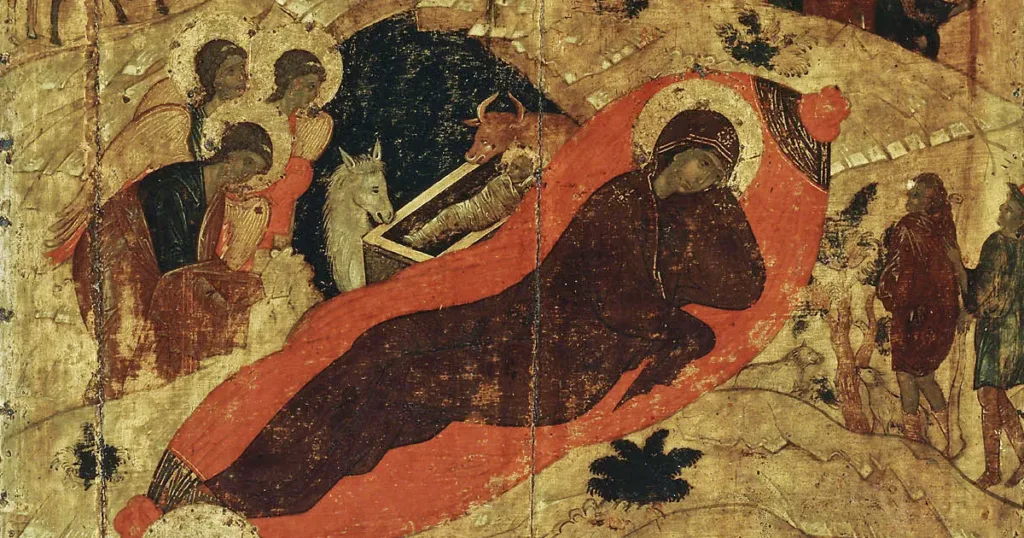
At Christmas we celebrate the Son of God becoming man, being born in a cave, laid in a feeding trough, and greeted mostly by shepherds and livestock. He did not come into a tidy world. He came into an ordinary, crowded, tired one, much like ours.
That is why the preparation happens in ordinary life: at the supper table, at work, in traffic, and with the person who needs something from us at exactly the moment we have nothing left to give.
Fasting teaches us how quickly I’d like becomes I need. Prayer brings us back to God when we wander, which is often. Giving to someone else turns all of that inward work outward, where it belongs. A simpler supper is part of it. So is the apology you have been putting off since about August.
How to Keep It
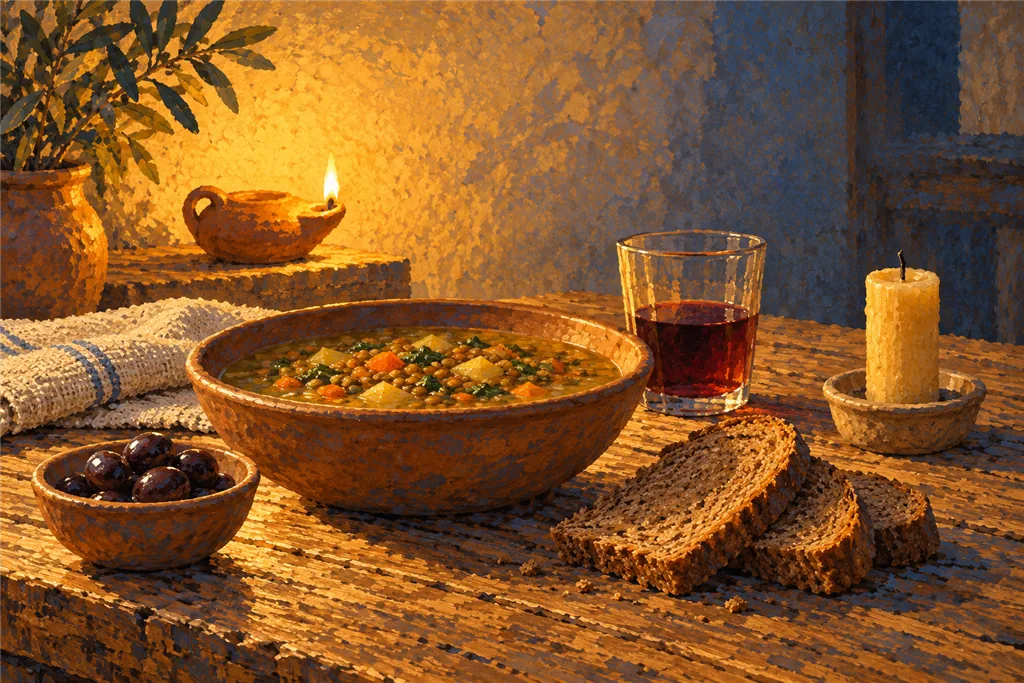
The traditional fast sets aside meat, dairy and eggs. Fish, wine and oil are allowed on some days and not others, and the rules vary from one tradition to the next. The last days before Christmas, from December 20, are stricter. Your parish calendar has the details, and your priest will help you apply them to your actual life, as opposed to the life you imagine you have.
If you are new, go to your priest and tell him the truth about your circumstances: your health, your work, your household, whether you are pregnant or on medication, whether you cook for a family of six who did not sign up for this. Ask him for a rule you can actually keep. A modest rule kept with a blessing is worth a great deal more than a heroic one abandoned by December 2.
Then keep it simply. Plan a few ordinary meals. Keep the prayer rule you have been given. Choose one practical way to help someone: a gift, a meal, a visit, or the gift of your time, which is the one people miss most. Go to the services you can. And talk to your priest about confession before the feast.
If someone invites you to dinner, ask your priest how to handle it, and if you can, tell your host kindly ahead of time. Hospitality is a virtue too. Nobody’s plate needs to become a public examination, least of all your neighbor’s.
And then there is Thanksgiving. In the United States, it falls on the fourth Thursday of November, which on the New Calendar always lands inside the Nativity Fast. (On the Old Calendar, it almost always comes just before the fast begins, so enjoy your turkey with a clear conscience.) Many bishops in America give a blessing to set the fast aside for the day, and some do not. If you are worried about sitting at the family table, please ask your priest or your spiritual father for guidance. Giving thanks is not against the rules.
And if you slip, and you will, go back to the rule the next meal. The feast is not a trophy for people with perfect attendance. It is a gift, and gifts are given to people who don’t deserve them. That is more or less the whole point of Christmas.
The Road Through the Fast
Forty days can feel long in the middle. The Church scatters feasts along the way, like inns on a long road.
- The Entry of the Theotokos into the Temple (November 21). One of the twelve Great Feasts, a week into the fast. The Church remembers the little girl Mary being brought to the Temple by her parents. It is a fish day, which some of us look forward to more than we should.
- St Nicholas (December 6). Yes, that Nicholas. Bishop of Myra, defender of the poor, and the original behind a certain gentleman in red. Many families mark his day with small gifts for the children, which is a good way to keep Christmas giving pointed in the right direction.
- The Sunday of the Holy Forefathers. Two Sundays before Christmas, the Church remembers the righteous of the Old Testament, everyone who waited for this birth and did not live to see it.
- The Sunday before Christmas. The Gospel that day is the genealogy from Matthew: a long list of names, some holy, some scandalous, all of them family. It is the Church’s way of saying that Christ came into a real family tree, with all its branches, including the ones we don’t talk about at dinner.
- Christmas Eve (December 24). The strictest day of the fast. In the morning the Church serves the Royal Hours; later, Vespers with the Liturgy of St Basil. In many Slavic homes, nobody eats until the first star appears in the evening sky, in memory of the star over Bethlehem. Then comes a simple, meatless supper, often with an old custom of twelve dishes for the twelve apostles. Children have been known to watch the window very closely.

And then, at last, the feast.
Is This Advent?
You will sometimes hear Orthodox Christians call this season Advent, and that’s fine. Both words point toward getting ready for Christ’s coming.
But if you grew up in the West, as I did, you will notice the differences. Western Advent usually begins on the fourth Sunday before Christmas. The Nativity Fast begins earlier, on a fixed date, and lasts forty days, with its own services and its own fasting customs.
If you miss your Advent wreath, some Orthodox families keep a six-candle wreath during the fast, one candle for each week or so. It is a lovely household custom. It is not required, and it does not replace the Church’s services. It does, however, give the children something to look forward to that is not a fish stick.
We keep the fast because the feast matters. Forty days is not too long to get ready for God becoming one of us.
For more on keeping a fast without turning it into a private trial, read Fasting Without Despair. For the wider pattern of the Church’s year, see The Liturgical Year.