

The Church Building
What you see when you walk in: the narthex, the nave, the iconostasis, and the altar, and why it is all arranged as it is.
An Orthodox church is built to be read. Almost everything you see has been placed where it is on purpose, and together it tells one story: heaven and earth meeting, and God coming down to dwell with His people. You don’t need to know any of this to pray there. But once you know it, the building begins to speak.
The Church calls the building a temple, a house of God. It is built to resemble the great Temple of Solomon in Jerusalem, in three parts, moving from the world toward the holy place:
- The outer court becomes the narthex.
- The Holy Place becomes the nave.
- The Holy of Holies becomes the altar.
In Solomon’s Temple, a heavy veil hid the Holy of Holies, and only the high priest went in, once a year. When Christ died on the Cross, that veil was torn in two (Matthew 27:51). Now, when the Royal Doors open, the whole church can see into the holy place.
Facing east
Most Orthodox churches face east, toward the rising sun. Christ is called the Dayspring from on high (Luke 1:78), and the Church has always prayed toward the east, watching for His coming. When you stand in the nave, you are facing the same direction as everyone around you, and as the priest at the altar: one people, turned together toward the Lord.
The narthex
The narthex is the entrance hall, the threshold between the world and the church. Here people light candles, venerate an icon (often the icon of the feast, or of the church’s patron saint), and gather themselves before going in.
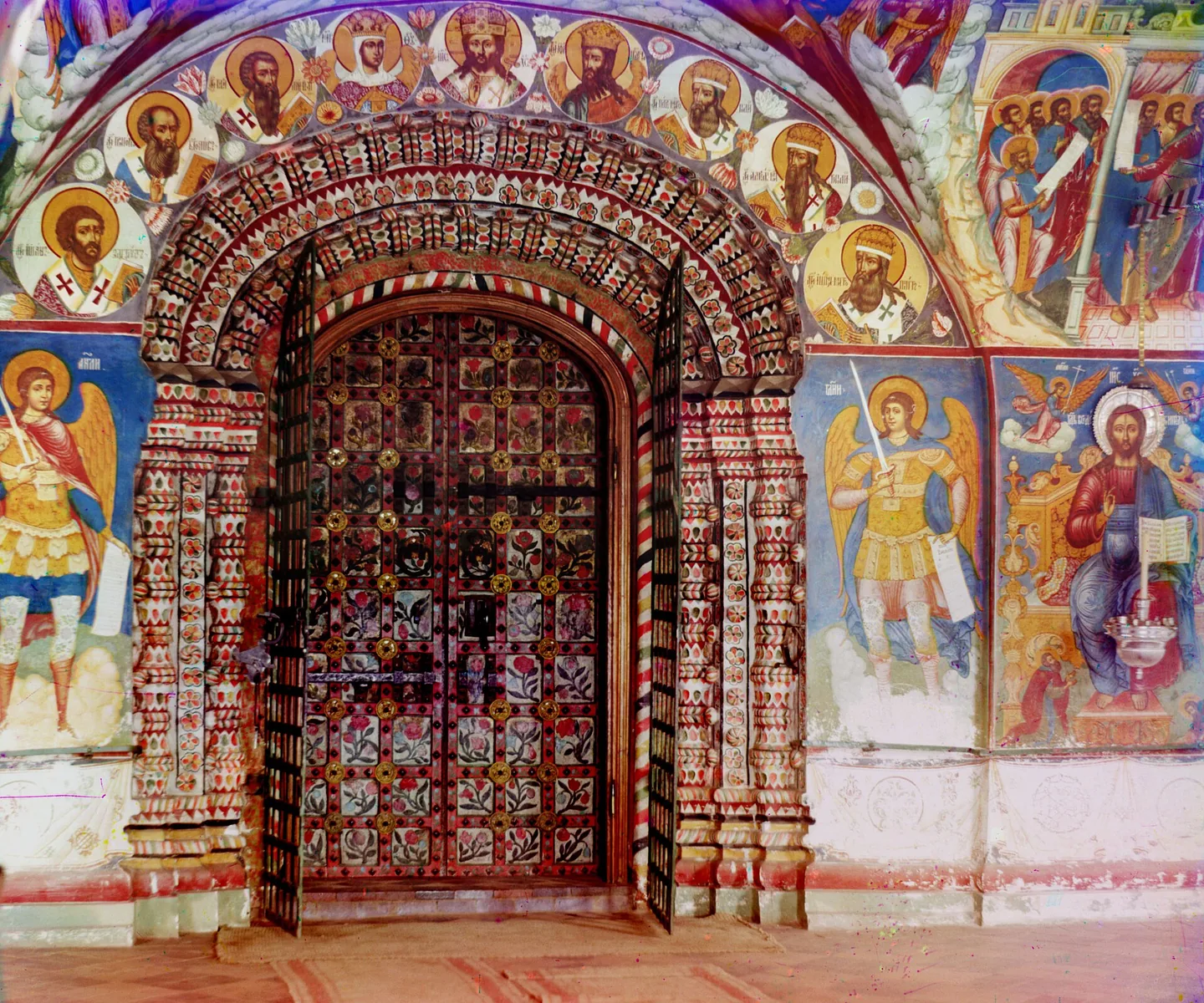
The narthex is also where people are brought into the Church. A catechumen stands here, at the entrance to the nave, to be received, and then the priest leads them in. A couple to be married is betrothed here before being led in for the crowning, and a mother brings her newborn here at forty days to be churched. At every beginning, someone is met at the door and brought inside.
In earlier centuries, the narthex was also where the catechumens went during the Divine Liturgy. After the prayers for them, the deacon calls out, “Catechumens, depart!” They withdrew to the narthex, and only the baptized remained in the nave for the Liturgy of the Faithful. The words are still said today, a reminder of how great a thing it is to be brought all the way in.
It is a good place to pause, cross yourself, and leave the day’s noise at the door.
The nave
The nave is the main body of the church, where the people stand. The word comes from the Latin navis, a ship: the Church is an ark carrying her people through the waters of this life. Many Orthodox stand for the services, as people stand in the presence of a king.
The walls are often covered in icons and frescoes: saints, feasts, scenes from Scripture. You are never praying alone. The saints are painted around you because they are worshipping with you.
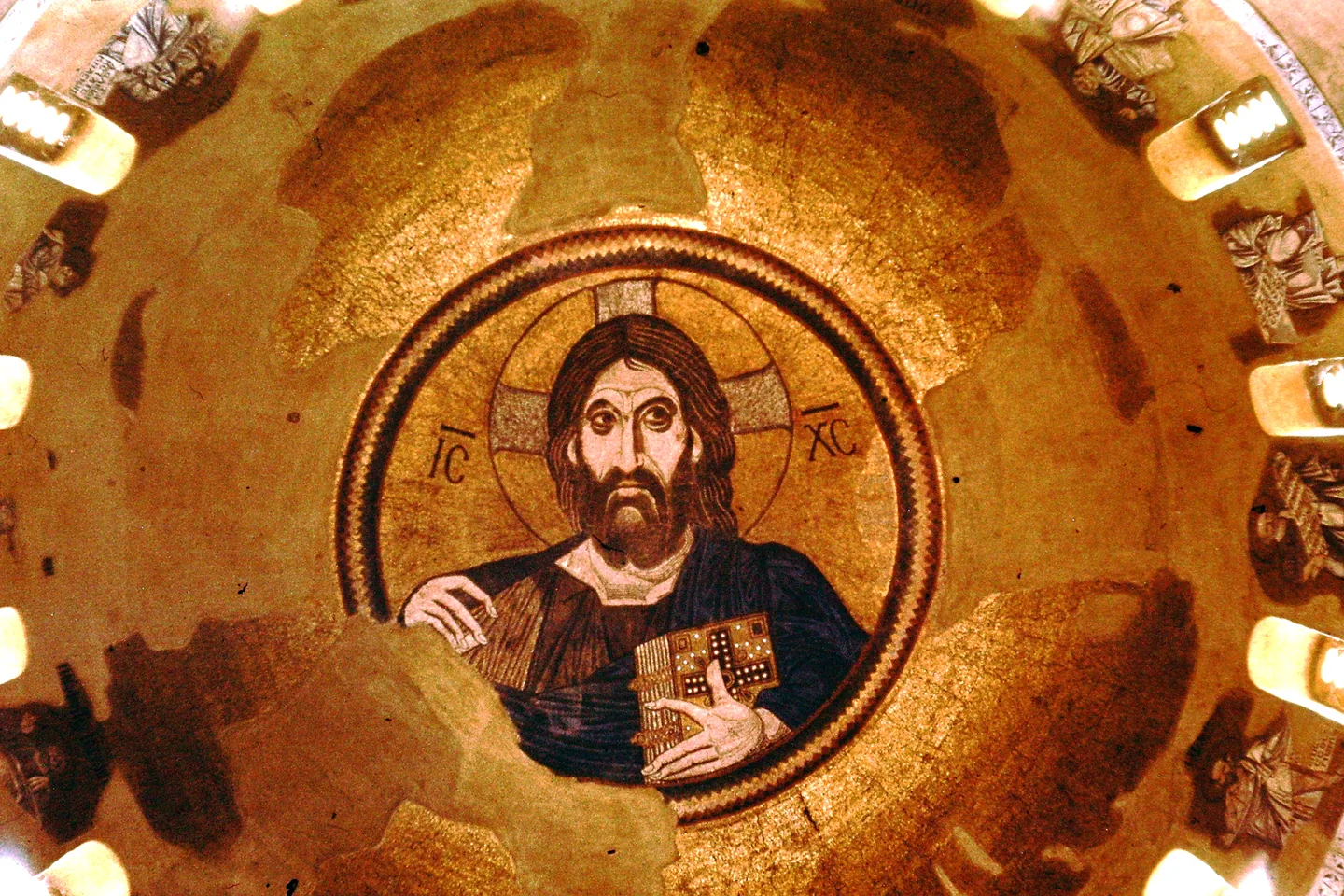
Look up. In many churches, the central dome holds the icon of Christ Pantocrator, the Ruler of All, looking down from heaven. The dome is the sky of the church, and Christ is at its center.
The iconostasis
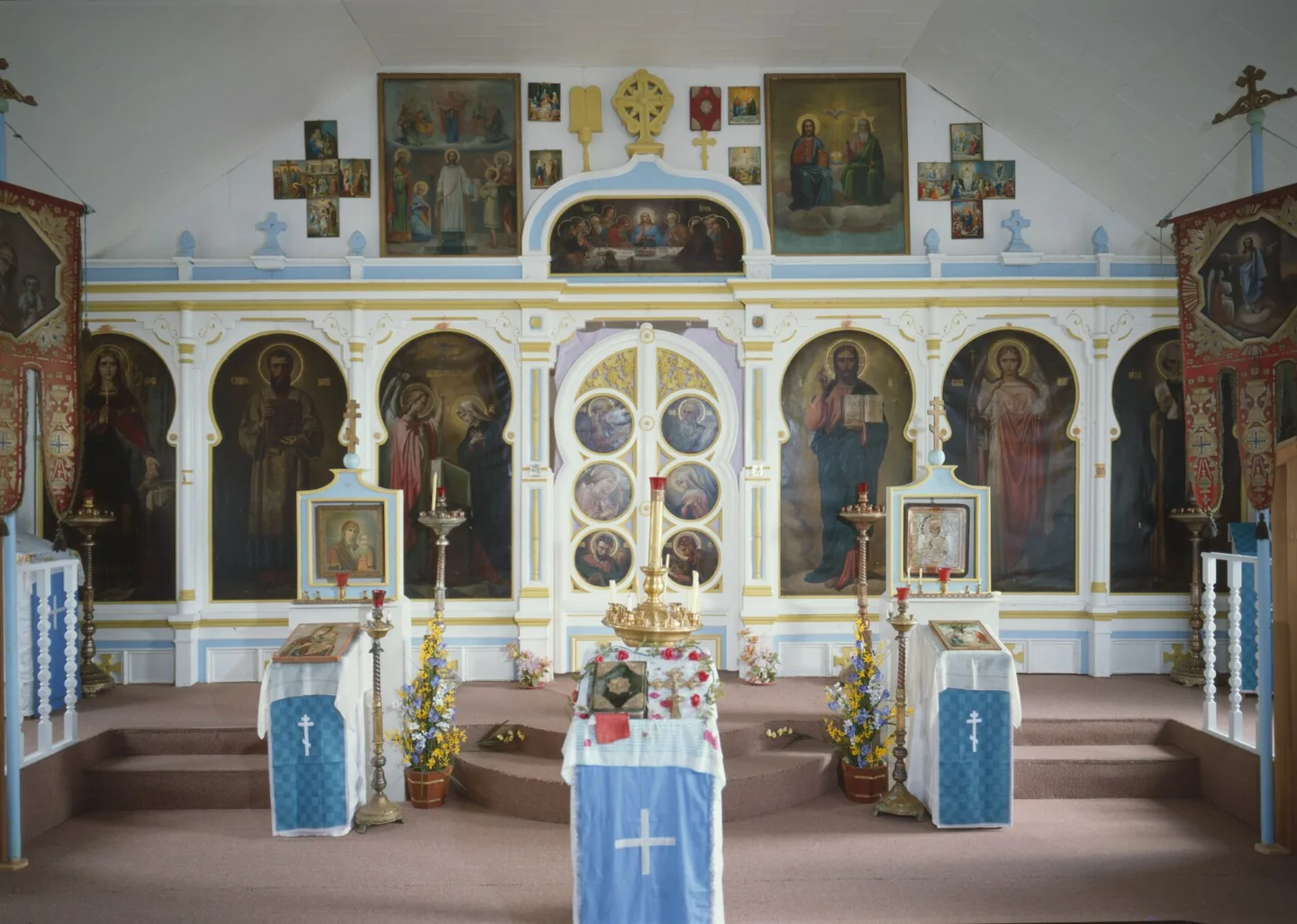
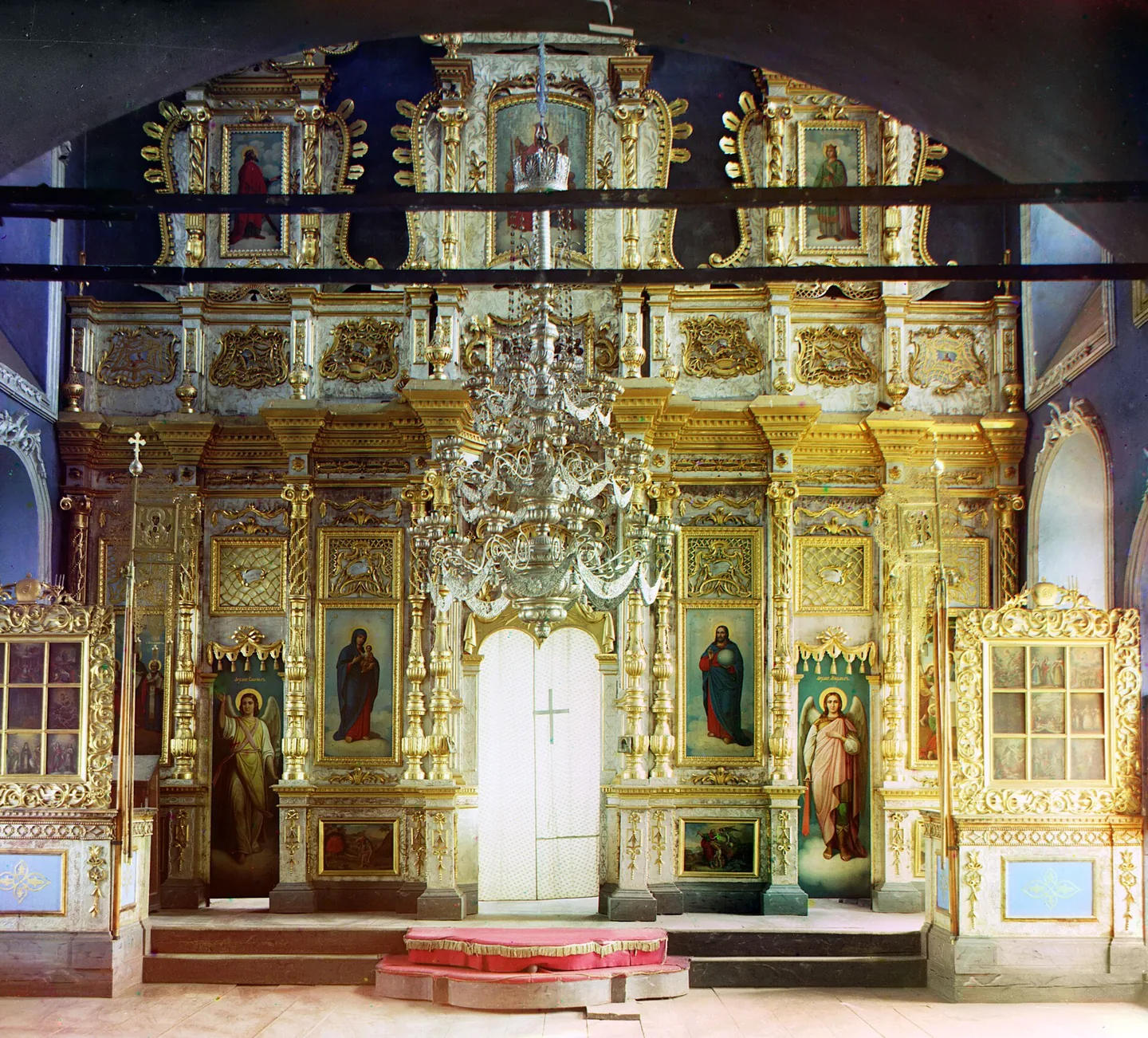
At the front of the nave stands the iconostasis, the screen of icons that separates the nave from the altar. It is not a wall that shuts heaven away. It is a window: the faces of Christ and His saints, standing at the place where heaven and earth meet.
The order is always the same:
- The Royal Doors in the center, through which the priest carries the Gospel and the Holy Gifts. They usually bear the icon of the Annunciation and the four Evangelists: the beginning of our salvation, and its proclamation.
- Christ on the right of the Royal Doors, as you face them.
- The Theotokos holding the Christ Child on the left.
- Next to Christ, often St. John the Forerunner; next to the Theotokos, the saint or feast the church is named for.
- The Deacons’ Doors on either side, usually bearing archangels or holy deacons.
Above the Royal Doors you will often see the Mystical Supper. In larger churches, especially in the Russian tradition, the iconostasis rises in tiers: the feasts, the apostles, the prophets, and the patriarchs, a whole history of salvation reaching up toward heaven.
The altar
Behind the iconostasis is the altar, the holy place. In the center stands the holy table, where the Divine Liturgy is celebrated and the bread and wine become the Body and Blood of Christ. On it rest the Gospel book, a cross, and the tabernacle that keeps the reserved Gifts. To one side is the table of oblation, where the Gifts are prepared.
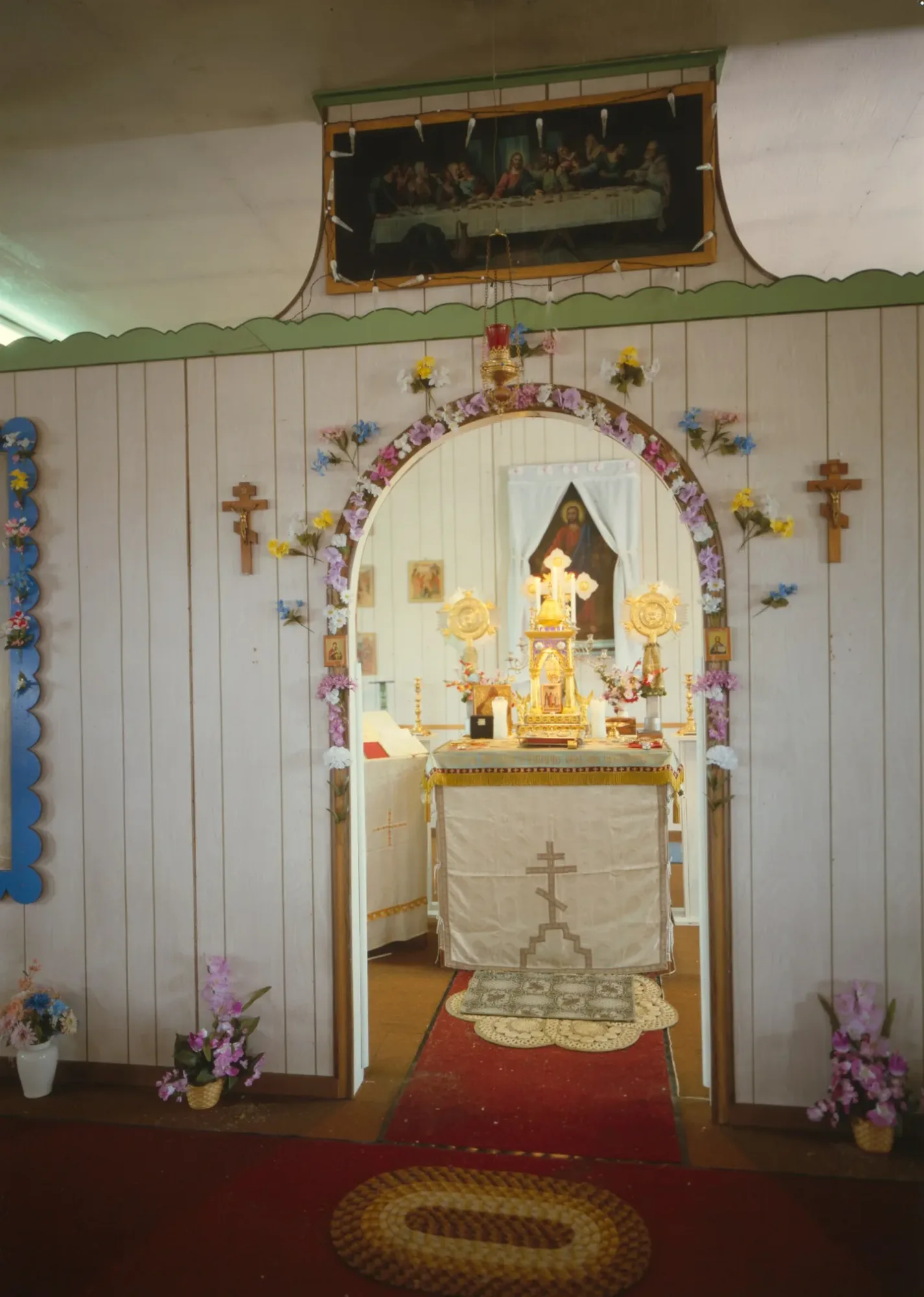
The altar is entered only by the clergy and those who serve with them. This is not because the people are kept out, but because this is the place where heaven is opened, and it is approached with awe. Through the open Royal Doors, everyone in the church can see into it.
Light, incense, and bells
- Candles. Lighting a candle is a small, silent prayer: for someone you love, for the departed, for yourself. The light keeps praying after you sit down.
- Lampadas. Small oil lamps burn before the icons, a sign of watchful prayer that never goes out.
- Incense. “Let my prayer be set forth before Thee as incense” (Psalm 141:2). The smoke rising is our prayer rising.
- Bells. Many churches ring bells to call the faithful and to mark the great moments of the services.
When you visit
You are welcome. Nobody will mind if you don’t know what to do. Stand quietly, light a candle if you’d like, and watch. If you’re unsure where to stand or what is happening, ask anyone after the service. Orthodox people are usually glad to explain their church.
Come and see (John 1:46).