

Departing and Remembrance
How the Orthodox Church walks with the dying, the departed, and those who grieve — prayers for the departed, the memorial days, and how to comfort a friend.
When someone we love falls asleep in the Lord, the Church does not leave us to find our own words. She gives us prayers, days to keep, and things to do with our hands. This page gathers the simple essentials, for your own household, or for a friend whose family is grieving.
For the fuller story of the funeral and the days after, read When We Fall Asleep in the Lord.
We say “fallen asleep”
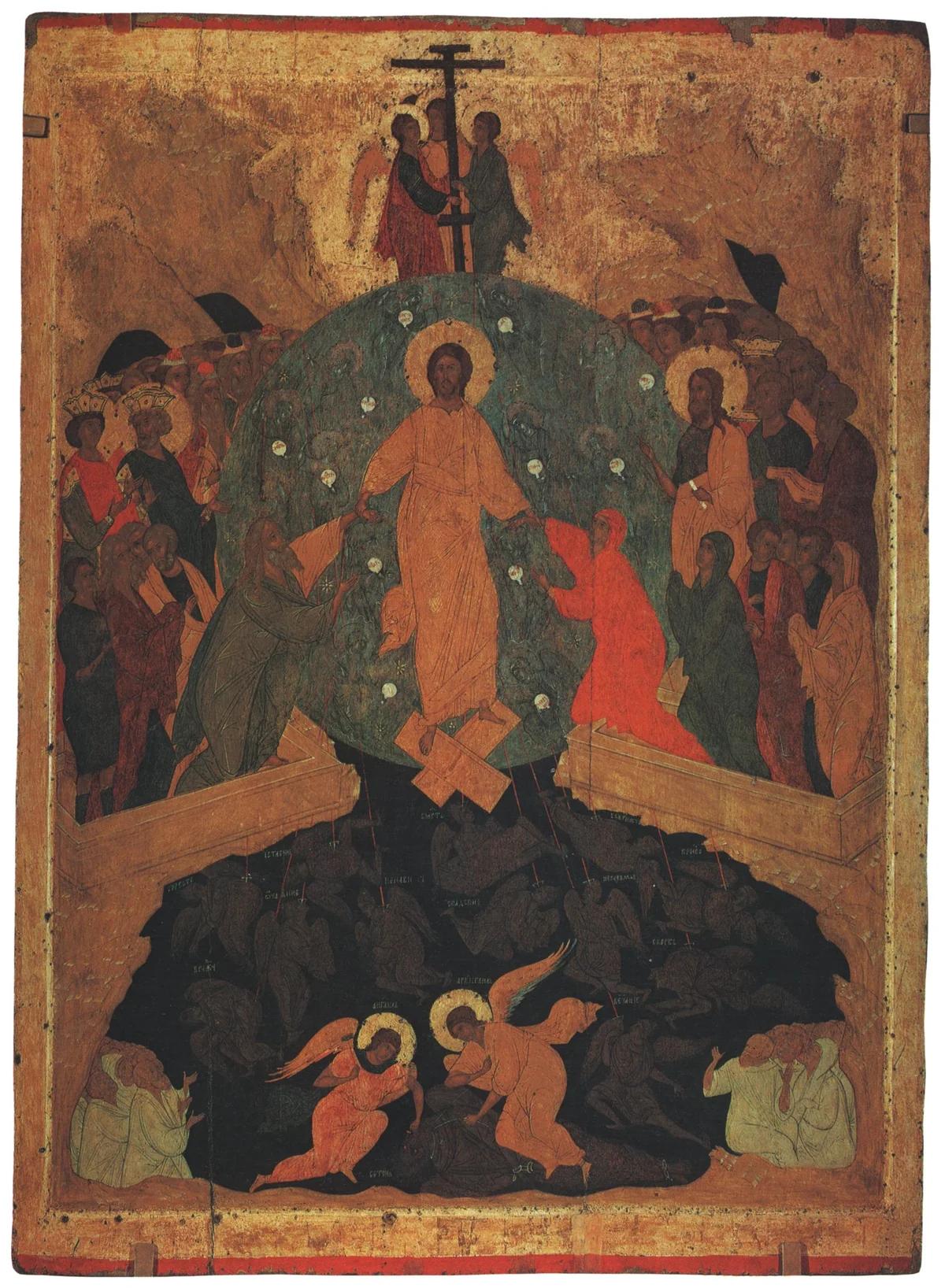
Orthodox Christians say the departed have fallen asleep in the Lord. It’s the language of the Gospel, and it carries our hope: sleep is something we wake from. We grieve, but not as those who have no hope (1 Thessalonians 4:13). And we keep praying for them, because love does not end at the grave.
When death comes
- Call the priest as soon as you can, ideally before death, so he can pray with the one who is dying and bring Holy Communion. After death, he’ll guide the family through what comes next.
- The body is honored. It is washed and dressed with care, and the Church asks for burial rather than cremation, because the body will be raised.
- Prayer begins at once. The family and friends read the Psalter beside the body, and the priest serves the first prayers for the departed (the Trisagion service) at the home or the funeral home.
Prayers for the departed
The Church’s prayers for the departed are gathered on our Prayers for the Departed page.
You can pray these at home, at the graveside, or whenever the person comes to mind. Many families keep a list of their departed in their prayer corner and read the names each day.
The days of remembrance
The Church keeps remembering long after the funeral.
| When | What it means |
|---|---|
| The third day | The funeral is usually held about now, in honor of Christ’s Resurrection on the third day. |
| The ninth day | A memorial service, asking that the departed be counted with the nine ranks of angels. |
| The fortieth day | A memorial on the day that recalls Christ’s Ascension, forty days after Pascha. Many families hold a meal of remembrance. |
| Each year | A memorial on the anniversary of the repose, and on the person’s name day. |
| Saturdays of Souls | Days the whole Church prays for all the departed: the Saturday before Meatfare Sunday, the Saturdays of Great Lent, and the Saturday before Pentecost. |
At a memorial, the family often brings koliva: boiled wheat, sweetened and decorated with a cross. It recalls Christ’s words that a grain of wheat must fall into the earth and die to bear fruit (John 12:24). It’s blessed and shared after the service.
Comforting someone who grieves
You don’t need the perfect words. Show up, and keep showing up after the funeral, when the house goes quiet.
- What to say: “May his memory be eternal,” or simply “Memory eternal.” “I’m praying for him, and for you” means a great deal.
- What to bring: a meal, or an offer to help with the practical things. Ask the family before sending flowers; some prefer a gift to their parish.
- At an Orthodox funeral, if you’re not Orthodox: you’re welcome. Most people stand through the service. You’ll be handed a candle to hold. Near the end, mourners come forward to say goodbye, and Orthodox faithful kiss the icon or cross placed with the departed. You can simply bow your head or pause in prayer. Nobody will mind.
- Afterwards: remember the ninth and fortieth days with the family. A note or a call on those days tells them their loved one isn’t forgotten.
Ask a priest
Customs differ between parishes and traditions, Greek, Slavic, Antiochian and others. When the time comes, your parish priest is the best guide for the family. If you have a question you’d like answered here, you’re welcome to write to me.
Memory eternal.