
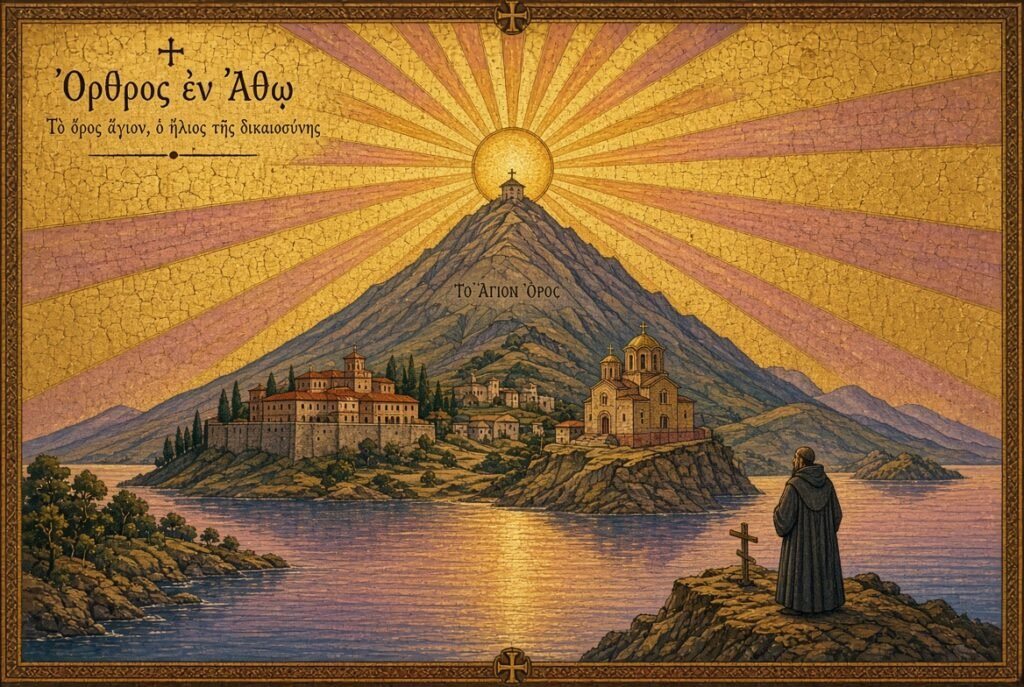
I was standing outside the other evening watching the light change over the mountains and found myself having a quiet argument with myself.
Does the new day begin at sunrise? At midnight? Or… at sunset the evening before?
Most of the modern world has settled the question for practical reasons. Clocks roll over at midnight because accountants and train schedules demand it. The workday starts with the sun because farmers and office managers prefer daylight. And yet the Church has always answered differently, and her answer is older than any clock, older even than the invention of the mechanical hour.
In the first chapter of Genesis we hear the same refrain, almost like a refrain in a hymn: “And there was evening and there was morning, the first day… the second day… the third day…”
Evening comes first. Then morning.
It is such a small detail that we usually rush past it. But the Church never did. She still begins the liturgical day at sunset. That is why the great feasts open with Vespers the evening before. That is why Saturday evening already belongs to Sunday. That is why the light of Pascha first breaks into the darkness of Holy Saturday night and not at the polite hour of dawn. The Church simply refuses to wait for the sun to get its act together.
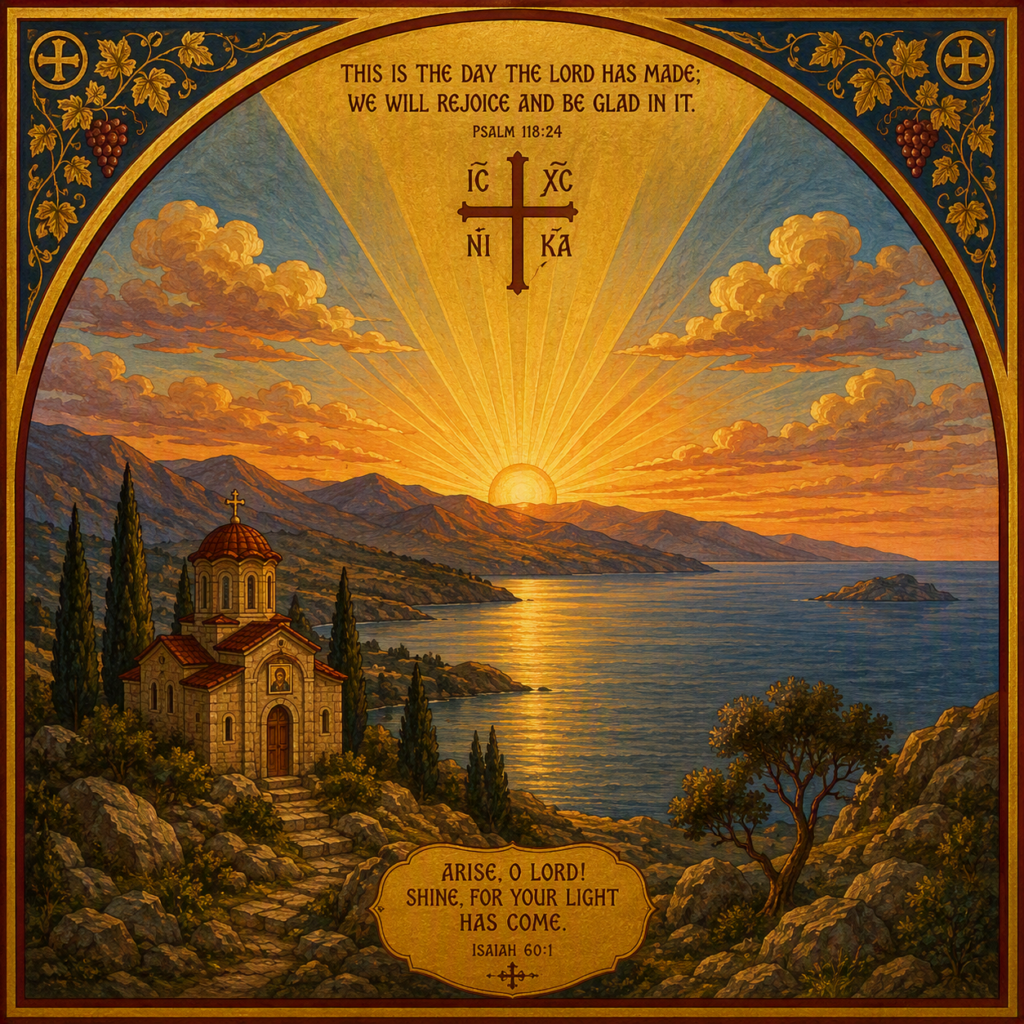
There is a quiet humor in this, if we allow ourselves to notice it. The world measures time by the rising of the sun, as if the day only becomes legitimate once the sky is properly lit and everyone can see what they are doing. The Church measures time by the setting of the sun and the long, hopeful waiting that follows. She seems almost fond of the dark. Or at least unafraid of it.
Night, in this older reckoning, is not the exhausted end of the day. It is the beginning. We move from darkness toward light, not the other way around. We start in need and end (God willing) in illumination. The Christian life itself follows the same awkward, hopeful shape: we begin in the shadows of our own insufficiency and are drawn, slowly and by grace, into the brightness of Christ. It is not a very efficient system. It is, however, an honest one.
I have tried, on better evenings, to live by this older clock. I sometimes sit on my porch with a glass of wine and watch the sun set over Pikes Peak. I think over the day—the things I’ve done, the things I might have done better. And more often than I expect, my mind turns to the Apostles, the Desert Fathers, and the long line of ordinary believers who once sat under the same fading light, pondering their own days. There is a quiet irony in it, or perhaps simply a quiet kinship: the same sun, the same questions, the same small hope that the Light is still coming. When the last light turns the mountain the color of old icons, I remember to whisper a quiet “Glory to God.” It feels a little foolish at first—sitting there like a man who has lost track of which day it is. But then again, perhaps that is the point. We have all lost track of which day it is. The Church simply admits it first.
So the next time the sun goes down, you might try greeting it the old way. You do not need to be particularly holy or well-rested. You only need to be willing to begin again in the dark, trusting that the Light is already on His way.
The new day has already begun. We are simply the last to notice.