
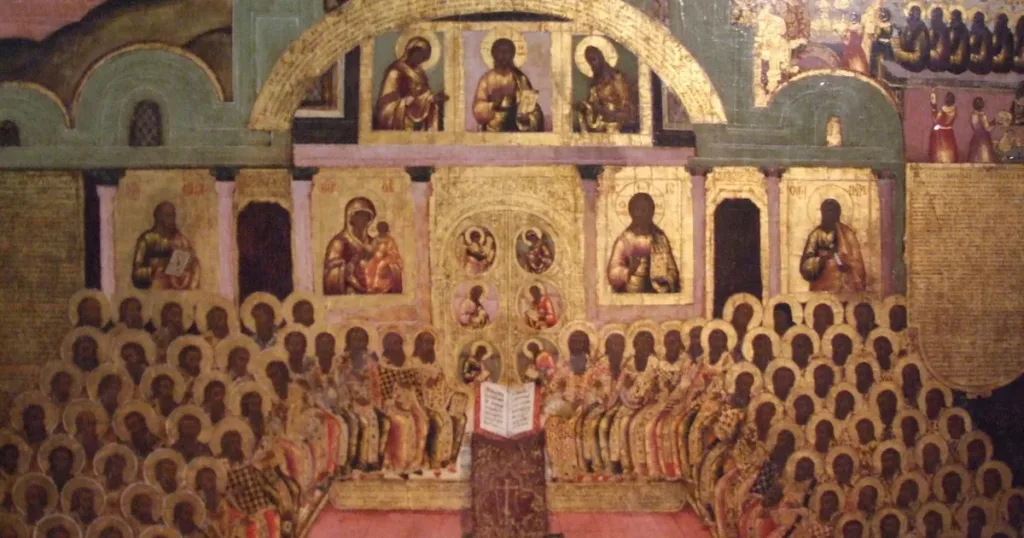
I want to tell you a true story.
It is the story of the seven Ecumenical Councils: seven times, over nearly five hundred years, when the bishops of the whole Church gathered to answer a question that could not be left unanswered. Who is Christ? Is the Holy Spirit God? Who is the woman who bore Him? May we paint His face?
I will tell it the way the Church has handed it down to us, faithful to our tradition. But I will be honest with you, too. Some parts of this story have been told differently by historians, and some of the best-loved moments come to us from tradition rather than from the records of the time. At the end of each essay I will tell you where those places are, and what the disagreement is. You can make up your own mind. I am not afraid of the questions, and you should not be either.
You may never hear it told quite this way again.
Because this is not a dry chapter of Church history. It is a story of emperors and bishops, of exiles and hiding places, of councils packed and councils overturned. It has war within the Church, fierce debate, saints who stood almost alone, and moments of possible deception and worse. It has men who walked out of the desert to say the hard thing in the city, and congregations who kept singing the true faith when their own bishops would not.
And under all of it, it is the story of our tradition: how the Church, through all that noise and danger, held together and kept the faith that was handed to her. The Creed you say on Sunday came out of this story. So did the icons on the wall.
It is, honestly, one of the most fabulous dramas ever told.
So read it. Learn from it. Argue with it if you must, and bring your questions to your priest.
And most of all: believe, and keep the faith.
— Padraig